
I want to hear you be brave.
Recitals are hard. That's why we do them.
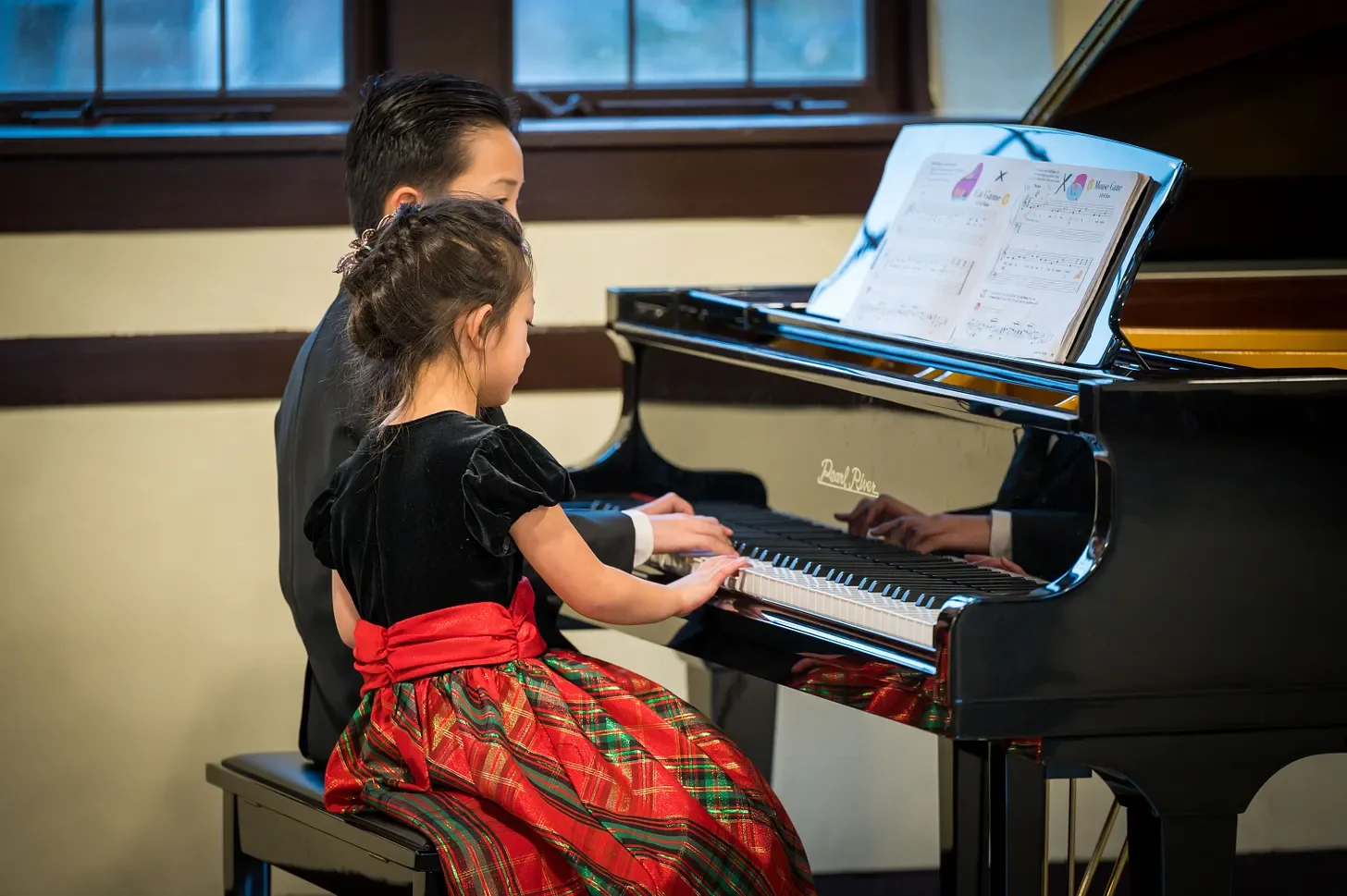
It’s recital week at Pakachoag Music School. The grand finale, the closing ceremony, the final bow.
Sara Bareilles and her song "Brave" immediately came to mind. If you don’t know it, it’s worth a listen.
This week stirs up a lot of emotions, from nervous, last-minute practicers to glowing, proud families and everything in between. It’s also a culminating time for our hard-working, diligent, and caring faculty. Everyone has invested a lot into these moments; finishing well is at the top of everyone’s minds.
Full disclosure: recitals have always terrified me.
From my earliest days as a musician, performing in front of people has been a struggle. What began as routine nervousness in grade school grew into performance-altering anxiety as an adult musician. It’s still really, really hard for me to summon up the courage to play in front of an audience of any size.
I’m not alone. I’ve heard from more than one of our students about how nervous they’re getting for this weekend. Trust me, I understand.
So why on earth do we continue to put ourselves through this?
Nerves are normal.
Performances are stressful for musicians, from our littlest artists to opera divas. There’s no use pretending otherwise. Even seasoned performers feel butterflies before stepping into the spotlight. Sharing your work—sharing yourself—in front of others is no small feat.
There’s a simple truth I’ve heard all my life, even though it’s very difficult to really grasp. It applies to any activity worth attempting: sports, music, public speaking, teaching, etc.
Nerves don’t mean you’re doing something wrong.
Being nervous means you care. It means you’ve likely worked hard. It means you want to do well. It means you’re emotionally invested in what you’re about to share.
And to go one step further, working through these feelings is one of the most powerful parts of a recital. It builds real, durable resilience, not the kind that comes from easy praise, but from pushing through something difficult and coming out on the other side. In a world where we often avoid public risk, recitals (and activities like them) help us build the kind of courage that can translate over into presentations, interviews, team meetings, and everyday life.
Patient (sometimes painful) Progress
Music is slow work.
S. L. O. W.
It’s built one measure, one phrase, one session at a time. And sometimes, that slow progress can feel invisible, even painful, especially if you’re practicing day after day and wondering if you’re actually improving.
Recitals can help you believe it.
What once felt choppy or unimpressive gets polished and shared. What was private becomes public. Families see it. Friends applaud it. Teachers celebrate it. And students start to feel it: I’ve come a long way.
And even more than that, recital preparation often sharpens focus in the weeks leading up. There’s a finish line, a goal, and a reason to keep refining. It’s not just another week of lessons. It can be a launching pad for what’s next.
Recitals are a form of community.
Are recitals only about showing off progress and polished performances? No, I don’t think so.
At Pakachoag Music School, I’ve learned in a short time that we think of them as milestones. Celebrations. They are periodic gatherings where we pause to say, “look how far we’ve come together.” Everyone is in the pool. There’s a buzz you can’t really explain, and it isn’t replicated in any other event.
Not everyone plays perfectly. That isn’t the point. You’ll hear mistakes, forgotten notes, and pieces restarted halfway through. The point is to share something real and hard-fought. It’s meant to honor the effort. It’s to feel the presence of friends and family rooting for you. And for parents and caregivers? It’s a chance to watch the hard work (smiles, high-fives, frustrations, tears?) pay off.
Sometimes the biggest success isn’t the piece itself; it’s the deep breath, the smile, and maybe the family ice cream after it’s all over.
Behind the Curtain: What You Didn’t See
You didn’t see the seven-year-old who practiced her piece every night for two weeks straight, slowly building the courage to play it at the recital. She’s brave.
You didn’t see the teenager who almost skipped the performance, until his teacher convinced him that it would be a mistake to give in. He’s brave.
You didn’t see the adult beginner, just nine months into lessons, who quietly signed up and built the confidence to play in front of strangers. She’s brave.
You didn’t see the nerves in the hallway, the pride on the car ride home, or the confidence carried into Monday morning at school or work. They’re all brave.
That’s why we keep doing this.
Yes, recitals are hard.
But they’re also beautiful.
They mark the end of one chapter and the beginning of the next. They honor the hours of practice, the encouragement from families, and the patient coaching from teachers. They give students, young and seasoned alike, a moment to say, “I did it.”
This coming weekend, whether you're a parent in the front row or a student walking up to the front with real fear, know this: you're part of something bigger. You're not just performing music. You're building courage, community, and lasting joy.
Totally worth it, I’d say.
And if you’re reading this as a non-musician, take this as a call to go attempt something hard, something that will stretch you, something that will be worth it in the end. Music lessons at Pakachoag? : )
Tell us your recital story.
Was there a time you or your child faced the nerves and made it through? Leave a comment below. We’d love to hear how it went.
Note by note,
Nick
