
The most difficult note is the first one.
Practice doesn’t need to make perfect.
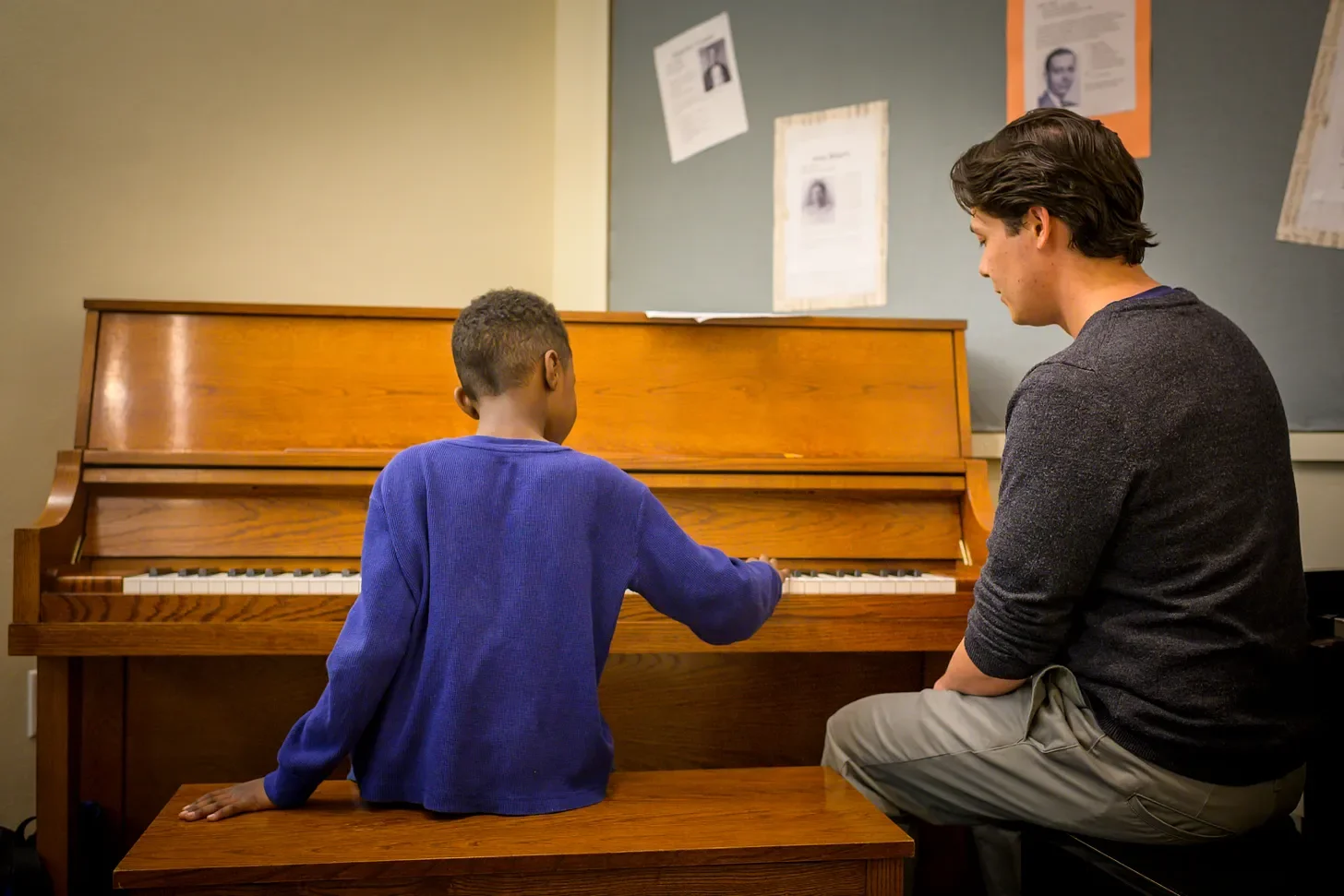
“My daughter absolutely loves playing piano—but she hates practicing.”
A mom confided that to me in the waiting area this past Friday afternoon, and her daughter - sitting beside her - nodded in agreement. When she plays the pieces she knows—often from memory—she lights up during lessons, races to the car singing her piece, and proudly talks about it with her mom; yet at home, the piano lid stays shut, almost like it was glued.
That tension—delighting in music while dreading practice—isn’t a minor irritation; it’s one of the biggest reasons students quietly slip away from lessons after a year or two. It’s even worse for adults: even the thought of practicing keeps them away from music lessons in the first place.
But why?
If we want music to remain a lifelong endeavor rather than a fleeting, or nonexistent, memory, we have to tackle the paradox head‑on: why is practice so hard, how can we make it easier, and what’s waiting on the other side if we do?
Why do our brains rebel?
Delayed gratification vs. dopamine now.
Practicing trades today’s effort for tomorrow’s payoff, while screens, snacks, and scrolling reward us instantly. Neurologists call this a “dopamine mismatch.” Our brains chase the quicker hit.Decision fatigue.
After a day of choosing outfits, homework answers, staff meetings, or managerial strategies, “Should I start with scales or the Sonata?” feels like one decision too many. The easiest choice becomes no choice.Perfection paralysis.
Social media showcases flawless performances; a squeaky F‑sharp on a violin can feel like evidence we’re not “talented.” So we delay the squeak… and therefore delay the practice.Lack of a visible finish line.
A video game flashes “LEVEL COMPLETE.” A workout app checks the box. Music practice can feel infinite and ambiguous—unless we build our own markers. And who really wants to do that?
We’ll do anything to cope.
When I was a young musician, my legs were too short on the piano bench for my feet to reach the floor. So I swung them. Back and forth, back and forth. My dad HATED it. He couldn’t understand why I did it. To him, it was a lack of self control. Now, as I look back, I think it might have been just the opposite.
Having something to do with my legs and feet seemed to keep me in the moment—mind engaged—and from slipping off into distraction and maybe off the bench altogether, literally and figuratively.
For Young Learners: A Few Ideas
The “First‑Minute Game.”
Take a standard set of dice and assign each number to a practice activity (scales, measure 12–16, play for the stuffed‑animal audience). Whatever lands is the only task required to win the day. Spoiler: once they start, I bet they keep going, at least for a few rounds.Micro‑recitals.
Set a time each week for the family or a group of friends to gather for a one‑song showcase. An audience (supportive, even!) transforms practice from private grind to public recognition—and it comes with a bonus: you’re building community with family or friends.Sticker Charts that Tell a Story.
Instead of random stars, create a winding path across the chart: each practice session moves the musician’s avatar toward a finish line, treasure chest, spaceship, or castle. Progress becomes visible, linear, and fun to retell. Maybe there’s a prize at the end?
For Adult Beginners or Returners
Habit Stacking.
After pouring your morning coffee, play two minutes of scales before the first sip. Pairing a new habit with a beloved ritual sidesteps decision fatigue. Here’s a quick plug for Atomic Habits by James Clear. Seriously, go pick it up.Visible Instruments.
Guitars on stands and keyboards out of closets send silent invitations. If opening the case is a chore, eliminate the case.Progress Playlists.
Record one take of your current piece every Sunday. Six months later, listen to Track 1 vs. Track 24. Nothing circumvents discouragement faster than your own evidence to the contrary.Community Deadlines.
Sign up for a casual ensemble, church band, or “grown‑ups only” studio recital. Adults fear public embarrassment even more than children; that fear, harnessed kindly, becomes rocket fuel.
The Rewards That Outlast the Effort
Compound Confidence.
Every conquered tricky passage says, “I can accomplish difficult things.” That mindset spills into math homework, staff meetings, friendships, and more.Cognitive Superpowers.
MRI studies show that sustained practice thickens the myelin around neural pathways, boosting memory, spatial reasoning, and even language skills. Weird, yes, but that’s a technical way of calling it brain-body cross‑training.Emotional Resilience.
Practice is a soft place to land for coping with mistakes, regulating frustration, and celebrating incremental victories—skills that therapists are trying to teach all the time.Community & Conversation.
From youth orchestras to Tuesday‑night jazz combos, musicians find their people. Shared challenges forge fast friendships.Joyful Expression.
Finally, there’s the sheer, goose‑bump thrill of hearing a piece take shape under your own fingers. No playlist can replace that spark.
A Tale of Two Students
Consider a couple of examples:
Eight‑year‑old Mia uses a simple routine: she rolls a six‑sided die with assigned tasks—scales, a tricky measure, her favorite tune—and completes whatever lands face‑up. Each finished task earns a bead on a bracelet so she can see her progress. She runs to dad with a finished, hard-won bracelet.
Across town, 50‑year‑old Kevin, a software engineer working from home who picked piano back up after decades away, sets a daily phone alert for a five‑minute session between meetings. When the timer rings, he plays one passage—no negotiations.
Both conquered that notorious first note.
Your Turn
Parents: Try the First‑Minute Game tonight and tell us what happened.
Adults: Set tomorrow’s coffee‑and‑scales date right now—calendar invites count! (Confession: I did it today, and I already feel just a little bit better.)
Everyone: Drop a comment below describing your own “practice paradox” and how you might be tackling it. We read every note.
The hardest note will always be the first one, but keep playing it… one small, stubborn, beautiful minute at a time.
Note by note,
Nick
